
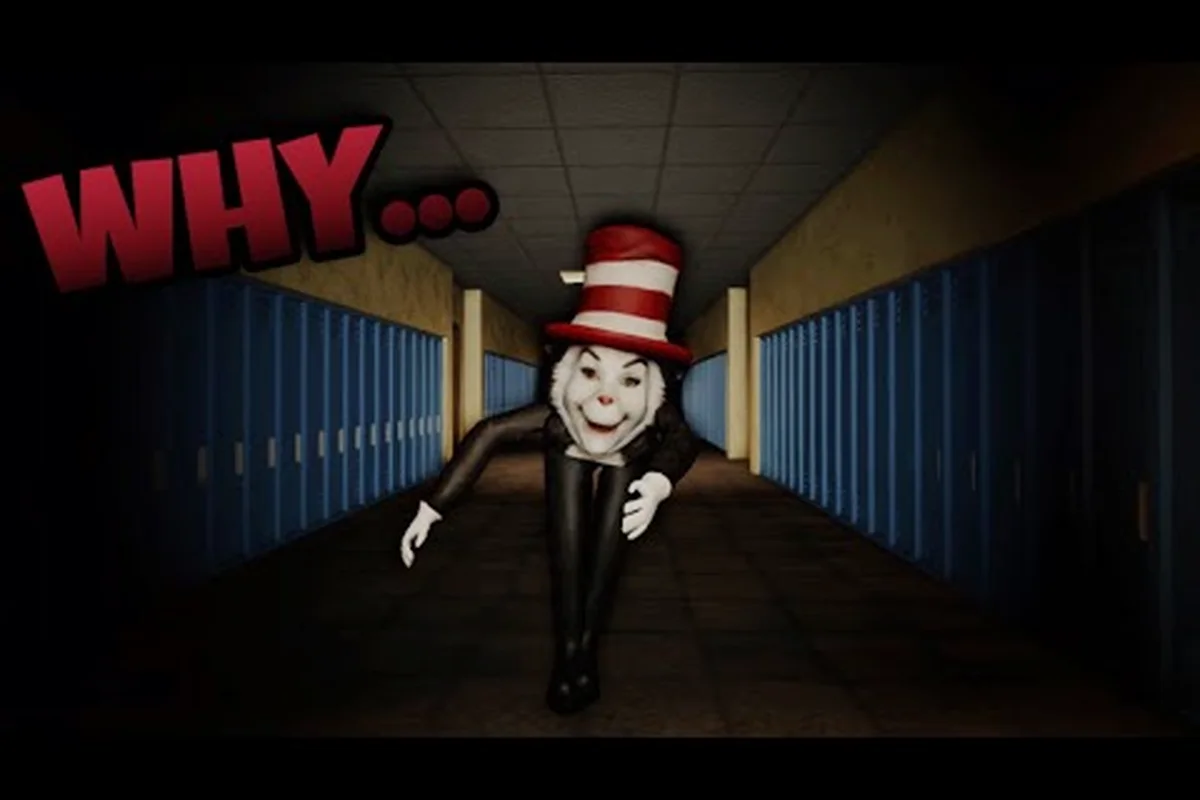
Picking the right first encounter in Scream And Run can decide whether a new player escapes the School map alive or feeds the monster their first jump scare. Among the current Scream And Run monsters, the Cat in the Hat is widely considered the scream and run easiest monster to outwit because its patrol logic is readable, its audio cues are loud and learnable, and its chase can be broken with simple line-of-sight tricks. This scream and run horror monster guide breaks down the monster AI step by step, compares the two main encounters available in 2026, and gives practical jump scare tips so your first run feels less like a horror movie and more like a solved puzzle.
Easiest Monster Encounters in the 2026 Build
Scream And Run launched in late August 2026 and, according to the official Scream And Run Roblox page, reached 10 million visits and roughly 14,600 concurrent players within two weeks. That kind of audience means a lot of players are walking into their very first Scream And Run monster encounters right now, and most of them will meet the same two creatures: the Cat in the Hat on the School map and Dark Thomas on the Mines map.
The current monster roster is small on purpose. Scream And Run is built around tension, not enemy variety, and each encounter is tuned to teach a different survival lesson. The School map teaches line-of-sight breaking and locker stealth. The Mines map, added in the September 2026 update, teaches noise discipline in tight corridors. If you can survive both, you have effectively learned the full Scream And Run monster AI toolkit.
| Encounter | Map | Monster | Released | Player Skill It Teaches |
|---|---|---|---|---|
| School | Main hub | Cat in the Hat | Launch (Aug 2026) | Line of sight, locker stealth |
| Mines | Secondary | Dark Thomas | Sept 2026 update | Noise control, tunnel routing |
| School Hard Mode | Main hub | Cat in the Hat (faster) | Patch 1.2 | Advanced loop timing |
Why the Cat in the Hat Is the Scream And Run Easiest Monster
The Cat in the Hat patrols the School hallways on routes that feel random at first but follow a clear weighted logic. According to community data, the cat prioritizes classrooms that still contain unfound keys, which means a player who has already looted a room becomes a lower-priority target. The monster also responds primarily to visual line of sight and a small set of loud audio cues, so a crouched player who avoids slamming lockers and running on hard floors can effectively become invisible.
This is the core reason the Cat in the Hat is the scream and run easiest monster: its detection model is built around two senses that players can directly control. Dark Thomas, by contrast, is reported by players to be more sensitive to echo and to flashlight use, which makes Mines runs feel less forgiving for first-timers.
Scream And Run Monster AI: How Detection Actually Works
Understanding the Scream And Run monster AI is the difference between running for ten minutes and escaping in four. The game runs two parallel detection systems, and each one has a different counter. Visual detection is a cone in front of the monster roughly 30 to 40 degrees wide; if you cross that cone while in its line of sight, a chase starts almost instantly. Audio detection is a radius around the monster that expands based on the sound you make: footsteps on tile are quieter than running on tile, opening a locker is louder than closing it, and dropping a key on the floor is the loudest single action in the game.
| Action | Visual Range | Audio Radius | Chase Trigger |
|---|---|---|---|
| Walking on tile | 12 studs | 6 studs | If seen |
| Running on tile | 14 studs | 14 studs | If seen or heard |
| Crouch-walking | 8 studs | 3 studs | Only at very close range |
| Locker open | 0 studs | 18 studs | If within radius |
| Key drop | 0 studs | 25 studs | Almost guaranteed |
| Flashlight on | +4 studs cone | 0 studs | If seen |
The key takeaway from the table is that crouch-walking is by far the quietest and shortest-range state in the game. Players who default to crouch after picking up a key tend to survive longer than players who sprint, because the AI only triggers a chase if it both detects the stimulus and has a path to reach you within a short window.
Detection Cone vs Hearing Radius
The two systems feel different in practice, and new players often misread them. A chase that starts while you are around a corner is almost always audio-triggered: the monster heard you open a door or slam a locker, then walked into your general area and reacquired you visually. A chase that starts at the end of a long hallway is almost always visual-triggered: you broke the line of sight too late, or you turned on your flashlight at the wrong moment.
A useful habit is to treat every room transition as two separate decisions: first, can I cross without being seen, and second, can I cross without being heard. Solving only one of those is what gets most Scream And Run monster encounters to end in a jump scare.
Jump Scare Tips for Scream And Run: Reading the Tension Cues
The jump scare in Scream And Run is not random. It is gated by a tension meter that fills as the monster gets closer, as the lights flicker, and as the background music stutters. According to community testing, the scare fires only when three conditions line up: the monster is within 8 studs, you are not in a locker, and the tension bar has been climbing for at least 4 seconds. That last condition is why standing still in a corner is sometimes safer than running — you reset the climb by creating distance.
| Tension Climb Source | Effect on Bar | Reset Method |
|---|---|---|
| Monster within 12 studs | +1 per second | Move > 20 studs away |
| Lights flicker event | +3 | Wait 6 seconds |
| Music stutter | +2 | Break line of sight |
| Locker entered | Reset to 0 | None |
| Flashlight on while close | +5 | Turn off flashlight |
The most common jump scare tips for Scream And Run all come back to this meter. If the lights flicker, change direction immediately because the monster is closer than it looks. If the music stutters, duck into the nearest classroom and crouch behind a desk. If you hear the breathing sound, you have about two seconds before the scare fires, which is just enough time to slip into a locker.
Locker vs Corner vs Desk
Each hiding spot interacts with the tension meter differently. A locker fully resets the bar and breaks chase audio, which makes it the safest option when the monster is hunting you. A corner behind a desk only resets the visual cone; the monster can still hear you if you breathe loudly or shift your camera. A standing crouch in the open does almost nothing.
For new players learning Scream And Run jump scare tips, the practical rule is simple: lockers for emergencies, desks for planned stealth, open crouching only when the monster is on the other side of a wall. If you want a deeper walkthrough of stealth layering, the Scream And Run hiding strategy guide covers locker entry timing in detail.
Cat in the Hat vs Dark Thomas: Which Monster Is Easier to Outwit
Comparing the two main Scream And Run monsters side by side is the cleanest way to answer the central question. The Cat in the Hat is faster in a straight line but loses line of sight more easily around corners. Dark Thomas is slower but its hearing radius is reported by players to be roughly 1.5x larger, and it patrols tunnels that do not offer many locker exits. For a first-time player, the Cat in the Hat is the easier monster to outwit because the School map gives more tools — lockers, classrooms, long hallways — to break a chase.
| Attribute | Cat in the Hat (School) | Dark Thomas (Mines) |
|---|---|---|
| Patrol speed | Medium | Slow |
| Chase speed | Fast | Medium |
| Visual cone width | 35 degrees | 30 degrees |
| Hearing radius baseline | 6 studs | 9 studs |
| Locker availability | High (every hallway) | Low (one per tunnel) |
| Flashlight sensitivity | Low | High |
| Best counter | Break line of sight | Mute footsteps, no flashlight |
| Recommended for first run | Yes | No |
If you want a fuller breakdown of Dark Thomas and how to chain mine tunnels safely, the Scream And Run chase tips guide has map-specific loop timing. Otherwise, treat the Cat in the Hat as your training monster, and only switch to Mines runs once you can clear School consistently with zero deaths.
When the Cat in the Hat Becomes Harder
There is one important caveat. On the Hard Mode version of the School map, the Cat in the Hat moves roughly 20 percent faster during patrol and starts chase from 2 studs farther away, which shrinks the safe window for breaking line of sight. New players should finish the normal School run at least three times before attempting Hard Mode, because the jump scare timing window drops below one second and most early jump scare tips stop working.
For a full progression path from normal to hard, the Scream And Run ultimate guide walks through the unlock order and which monster modifiers appear at each step.
Scream And Run Monsters: Practical Escape Loop for First-Timers
Putting all the pieces together, a first-time player who wants to face the scream and run easiest monster cleanly should follow a tight five-step loop. This loop is the same one used by players who have already escaped School in under four minutes, and it is built entirely around the AI behaviors described above.
| Step | Action | Why It Works |
|---|---|---|
| 1 | Spawn, crouch immediately, move to nearest classroom | Avoids initial patrol sweep |
| 2 | Search desks silently, no flashlight | Reduces audio and visual radius |
| 3 | After first key, hug walls, avoid center hallways | Monster patrols room centers |
| 4 | On any audio spike, enter nearest locker | Resets tension meter |
| 5 | Final key to exit, use locker chain if chased | Buy time to break line of sight |
The most common mistake is sprinting between classrooms. Sprinting roughly doubles your audio radius and pushes you into the visual cone earlier, which means more chases and more jump scares. Crouch-walking is slower on the clock but saves minutes of chase recovery, and the net escape time is usually shorter.
First-Run Chase Mistakes to Avoid
A few patterns show up again and again in Scream And Run monster encounters for new players. Turning on the flashlight the moment a key drops, because the key glints and feels safe to inspect under light. Opening lockers aggressively while the monster is mid-patrol, which creates a long audio event. Standing in a doorway after collecting a key, which keeps you in the visual cone longer than necessary. Each of these is a small mistake, but together they are the reason most first runs end in a jump scare.
| Mistake | Consequence | Fix |
|---|---|---|
| Flashlight on at key pickup | +4 studs visual cone | Pick up, move, then light |
| Locker spam while patrolled | 18 stud audio burst | Only enter lockers when chased |
| Standing in doorway | Held in visual cone | Step fully into hallway or room |
| Sprinting on tile | 14 stud audio radius | Crouch-walk by default |
| Ignoring flicker event | +3 tension, closer than expected | Reverse direction immediately |
Frequently Asked Questions
Which monster in Scream And Run is easiest for beginners?
The Cat in the Hat on the School map is the scream and run easiest monster because its patrol routes are predictable, its audio cues are loud and learnable, and the map offers enough lockers to reset a chase. Mines with Dark Thomas is the harder second encounter and not recommended for a first run.
How does the Scream And Run monster AI detect you?
Scream And Run monster AI uses two systems: a visual cone roughly 35 degrees wide and an audio radius that scales with the sound you make. Walking, crouching, lockers, and flashlight use all change both numbers. Crouch-walking keeps you under 8 studs of visual range and 3 studs of audio range, which is the safest state in the game.
What are the best jump scare tips for Scream And Run?
The best Scream And Run jump scare tips are: react to light flickers by changing direction, treat the breathing sound as a two-second warning before a scare, and always default to a locker over a corner or desk. The tension meter that drives jump scares resets fully inside a locker, which makes it the strongest panic button in the game.
Is Dark Thomas harder than the Cat in the Hat?
Yes. Dark Thomas is reported by players to have a 1.5x larger hearing radius, higher flashlight sensitivity, and patrols tunnels with fewer locker exits, which makes it harder to outwit than the Cat in the Hat. Save Mines runs until you can clear School consistently.
Can I avoid jump scares entirely on a first run?
Not entirely, because some scare conditions are baked into the tension meter, but you can cut them down to one or two per run by crouch-walking, avoiding lockers during patrol, and using the locker as a panic button only when the music stutters. New players who follow that loop typically report only a single scare on their first successful escape.