
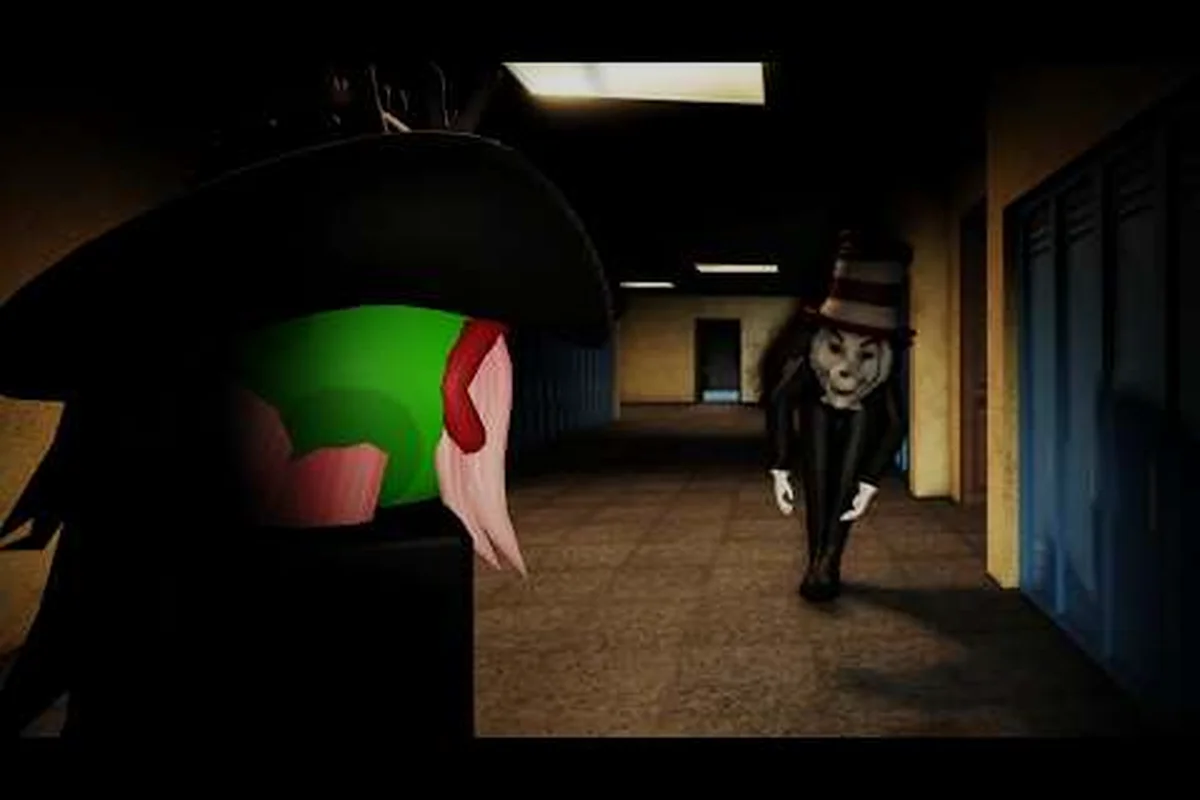
The Scream And Run Cat in the Hat is the iconic antagonist of the School map, a tall, striped creature that roams the hallways looking for any player foolish enough to slam a locker door. Knowing its patrol logic, sound radius, and chase triggers is the single biggest survival skill in this Roblox horror experience. This Scream And Run Cat in the Hat guide breaks down every confirmed behavior so your next run ends at the exit, not in a jumpscare.
Who Is the Cat in the Hat in Scream And Run
The Cat in the Hat is the original monster of the School map, introduced when Scream And Run launched in late August 2026. It is a slender, striped figure with a tall stovepipe hat, a red bow tie, and unsettlingly long arms that swing as it patrols. According to the official Scream And Run Roblox page, the creature roams the hallways on unpredictable routes and begins an instant chase the moment it spots you or hears a loud noise such as a sprinting footstep, a slammed locker, or a creaking door.
Visual Cues and Where It Spawns
The Cat in the Hat almost always spawns on the Ground Floor of the school at the start of a run, then drifts upward through the second and third floors as the timer ticks down. The first tell that it is nearby is a low, droning hum that slowly rises in pitch, paired with a faint spotlight cone projected from the hat itself. Players who have survived a few chases report that the cone tilts left and right as the monster "scans" a hallway, which gives you about a second of warning before a full lock-on.
Why This Monster Is the Hardest First-Night Threat
The School map is the only place the Cat in the Hat appears, and it is by far the most documented monster in the game. Dark Thomas took the spotlight with the September 2026 Mines update, but on the School side, the Cat in the Hat remains the only thing between you and the exit door. The two monsters use very different detection rules, so reading the Scream And Run monster guide siblings is the fastest way to compare chase behavior side by side.
How the Cat in the Hat Roams and Moves
Patrol is where this monster is most predictable and most dangerous at the same time. It follows a wandering loop rather than a fixed route, sweeping corridor clusters in a roughly 40–60 second rotation that can re-enter a previously cleared area without warning. Because the wander pattern biases toward the player's last known position, first-time players who rely on "he was just over there" memory almost always get caught mid-search — the safe play is to assume any two-door gap can re-spawn the Cat within one full patrol cycle.
Default Patrol Speed
The Cat in the Hat walks at a deliberate, almost theatrical pace that is roughly equal to a player crouch-walk. You can outwalk it on flat ground, but you cannot outwalk it while crouching, and you definitely cannot outwalk it once it has heard a noise. The wide swinging of its arms is the visual rhythm cue: one swing per step, arms clearing about a meter of corridor on each side.
Chase Speed and Stamina Cost
When the monster locks on to a player, its animation changes abruptly: the arms tuck in, the hat tilts forward, and the creature's stride lengthens into a full sprint. Community testing puts its chase speed at roughly 1.4 to 1.6× a player's max sprint, which means a straight-line sprint almost always loses. Sprinting burns your stamina bar in about four seconds, after which you slow to a walk and get caught within two or three more seconds.
| Movement State | Cat in the Hat Behavior | Player Counter |
|---|---|---|
| Idle patrol | Slow wander, swinging arms | Crouch-walk, hug walls, break line of sight |
| Investigating noise | Stops, head tilts, spotlight pulses | Freeze, do not move, wait 3-4 seconds |
| Locked chase | Forward sprint, ~1.5× player sprint | Sprint to corner, break line of sight, hide in locker |
| Lost target | Returns to last known position, then resumes patrol | Stay in locker at least 5 seconds after the hum fades |
Where Patrols Tend to Cluster
Players who have mapped dozens of runs report that the Cat in the Hat gravitates toward three "hot zones": the central staircase on the Ground Floor, the long L-shaped corridor on the Second Floor, and the cafeteria wing on the Second Floor that holds the exit door. Avoiding the staircase when you first spawn is the single most common piece of advice from veteran players, because the monster uses it as a vertical shortcut between floors.
Detection Rules: Vision, Sound, and Light
The Cat in the Hat has three senses that all feed into a single aggro meter: vision, sound, and light. Once any of them crosses a threshold, the chase starts and there is no going back until you break line of sight for at least three seconds.
Vision Range and Spotlight Cone
The hat-mounted spotlight is not just cosmetic. According to community testing, the cone is roughly 12 studs wide at 20 studs of distance and extends about 25 studs forward. The monster's "eyes" sit behind the brim, so when the cone sweeps over your character, the aggro bar fills almost instantly. The trick is to stay outside the cone when possible, or to slip behind a desk the moment the cone starts to swing.
Sound Detection Radius
This is the part most new players underestimate. The Cat in the Hat hears almost everything louder than a crouch-walk. The general community consensus, as of the September 2026 patch, is that the sound radius scales with the noise:
| Action | Approx. Sound Radius | Aggro Level |
|---|---|---|
| Crouch-walk | ~5 studs | None |
| Walk | ~12 studs | Low (causes head turn) |
| Sprint | ~25 studs | High (instant chase if within 20 studs) |
| Open / slam locker | ~30 studs | High (instant chase if within 25 studs) |
| Drop from height | ~20 studs | Medium |
| Flashlight flicker (rapid) | ~15 studs | Medium |
Worth noting: closing a locker door gently produces almost no sound and won't trigger aggro, while slamming it triggers the same instant-chase detection as a full sprint within 25 studs, matching the locker-row radius listed above. Because the Cat in the Hat in Scream and Run registers the impact + metal clang rather than the door's open state, the safest play is always to slide the latch shut from inside, then crouch-walk ~5 studs away before resuming movement toward the next dark thomas hiding spot.
Light Aggro and Flashlight Discipline
The flashlight is a survival tool, but it is also a beacon. A steady beam pointed at the floor barely registers, but a beam swept across the monster's face fills the aggro bar in about one second. The community-recommended pattern is to keep the flashlight pointed down at a 30° angle, only raising it to scan a room for keys, then immediately pointing it back at the floor.
How to Avoid the Cat in the Hat and Survive a Chase
Knowing the rules is one thing; turning them into a clean escape is another. The next three subsections cover the actual survival loop most experienced players use on a five-key run: chaining the scream and run cat in the hat chase loop, exploiting the new monster's patrol gaps, and recovering Dark Thomas stamina after a forced disengage. Each step is tuned around the scream and run dark thomas stamina window, since burning it too early against the scream and run thomas the train variant will leave you with no panic meter when the scream and run new monster rotates into your corridor.
Break Line of Sight, Then Hide
The most reliable counter to a chase is to break line of sight around a corner and immediately enter a locker. The Cat in the Hat will sprint to the last known position, pause for about three seconds, then either resume patrol or double back. Staying inside the locker until the humming sound fully fades (usually 5-7 seconds) is what separates a clean escape from a "he saw me again" moment.
Chain Crouch and Sprint Around Corners
If there is no locker nearby, the alternative is the crouch-sprint-corner pattern. You crouch-walk to a corner, sprint around it once the monster is looking the other way, and then crouch again. This burns stamina, but it lets you cross open hallways when lockers are too far away. The dedicated hiding spots guide maps out which rooms have the most lockers per square stud.
Use Doors and Desks as Buffers
Closing a door behind you does not stop the monster, but it does add about a one-second delay and a small audio cue that masks your footsteps. Desks are weaker, but they do break the spotlight cone for a few seconds. Pairing a door slam with a locker dive is one of the highest-percentage escape plays in the game, especially on the second floor near the science wing.
Cat in the Hat vs Dark Thomas and Other Monsters
A common question is how the Cat in the Hat compares to the newer monster, Dark Thomas, also known in the community as "Scream And Run Thomas the train." The two monsters share the same basic aggro loop but differ in chase style, terrain, and counterplay.
| Attribute | Cat in the Hat | Dark Thomas |
|---|---|---|
| Map | School | Mines |
| Detection | Spotlight + sound | Sound + lantern flicker |
| Chase speed | ~1.5× player sprint | ~1.7× player sprint (slower accel) |
| Favorite terrain | Hallways, staircases | Tunnels, cart rooms |
| Best counter | Locker, break line of sight | Tunnel corner, tunnel cart hop |
| Sound sensitivity | High | Very high (reacts to footsteps through walls) |
| Weakest sense | Peripheral vision (60° rear) | Forward cone only (almost no peripheral) |
For a deeper look at Dark Thomas and the Scream And Run new monster introduction, the dedicated guide covers the Mines update in detail. The short version: Dark Thomas is faster in a straight line but much worse at noticing players behind it, while the Cat in the Hat is slower but tracks movement with far more accuracy.
How the Patrol Difference Affects Strategy
On the School map, the Cat in the Hat's wandering loop means almost any room can become a danger zone, especially after a door slam. The Mines map, by contrast, channels players into tunnels where Dark Thomas can only approach from a few predictable angles. The end result is that School runs reward stealth and patience, while Mines runs reward burst sprinting through short chokepoints.
Advanced Tips, Co-op Play, and Patch Expectations
Watch community clips from top 5% Scream and Run Cat in the Hat survivors to spot the advanced habits that separate them from average runs: pre-staging at the dining room corner, chaining couch hops against the Cat in the Hat's patrol path, and audio-cuing teammates the instant his footsteps shift to the harder second-phase sprint. These small, repeatable habits compound fast, turning panicked escapes into clean retreats.
Stamina Budgeting During a Chase
The single biggest mistake is sprinting the moment the chase starts. A more efficient pattern is: walk for half a second to create a small gap, sprint for two seconds around the nearest corner, then crouch-walk into a locker. This sequence consumes about 60% of the stamina bar but guarantees line of sight is broken, which is the real win condition.
Co-op Callouts and Role Splitting
In a four-player run, the best-performing squads assign one player as a designated "bait" who carries no key and sprints to draw the Cat in the Hat away from the others, while the other three split up and clear keys from different floors. Voice callouts like "cat, second floor, moving east" let the key carriers plan a safe corridor swap. The dedicated chase tips guide covers a few extra co-op patterns used by the top-ranked squads.
Patch Expectations and Monster Balance
Scream And Run Studios has been actively tuning the Cat in the Hat since launch. The September 2026 patch slightly reduced the sound radius of locker slams after community feedback that new players were getting punished too harshly for a single mistake. Future patches are likely to keep adjusting the spotlight cone width and chase acceleration. The best way to stay current is to follow the developer on X (AimlessEddy) and the Scream And Run Studios Roblox group for live patch notes.
Frequently Asked Questions
Where does the Cat in the Hat spawn in Scream And Run?
The Cat in the Hat spawns on the Ground Floor of the School map at the start of every run, usually near the main entrance or the central staircase. It then drifts upward through the second and third floors as the run timer advances, so early-game danger is concentrated around the lobby and first-floor classrooms.
How do you avoid the Cat in the Hat in Scream And Run?
The safest counter to the Scream And Run Cat in the Hat is to crouch-walk, avoid sprinting, and keep your flashlight pointed at the floor. When a chase starts, sprint to the nearest corner, break line of sight, and dive into a locker until the humming sound fully fades, which usually takes 5-7 seconds.
Is the Cat in the Hat faster than the player?
Yes, the Cat in the Hat sprints at roughly 1.4 to 1.6× a player's max sprint speed, so a straight-line chase almost always ends in a catch. The only way to escape is to break line of sight around a corner and hide before it re-acquires you, because the monster cannot open lockers or doors.
How is Dark Thomas different from the Cat in the Hat?
Dark Thomas is the Mines map monster added in the September 2026 update, while the Cat in the Hat patrols the School map. Dark Thomas is slightly faster in a straight line, reacts to sound through walls, and has almost no peripheral vision, whereas the Cat in the Hat uses a spotlight cone, is more accurate, and tracks movement far more reliably.
Can you kill the Cat in the Hat in Scream And Run?
No, the Cat in the Hat cannot be killed or permanently stunned in the current build of Scream And Run. The only winning condition is to collect all five keys, unlock the exit, and escape before the monster catches you, which is why breaking line of sight and hiding in lockers is the only reliable counterplay.